Open Now how does music get leaked exclusive on-demand viewing. 100% on us on our media destination. Engage with in a immense catalog of selections demonstrated in HDR quality, the best choice for prime watching followers. With current media, you’ll always be ahead of the curve. Watch how does music get leaked selected streaming in ultra-HD clarity for a deeply engaging spectacle. Sign up today with our viewing community today to enjoy content you won't find anywhere else with completely free, subscription not necessary. Get frequent new content and uncover a galaxy of uncommon filmmaker media designed for first-class media addicts. Be sure to check out uncommon recordings—begin instant download! Witness the ultimate how does music get leaked visionary original content with sharp focus and hand-picked favorites.
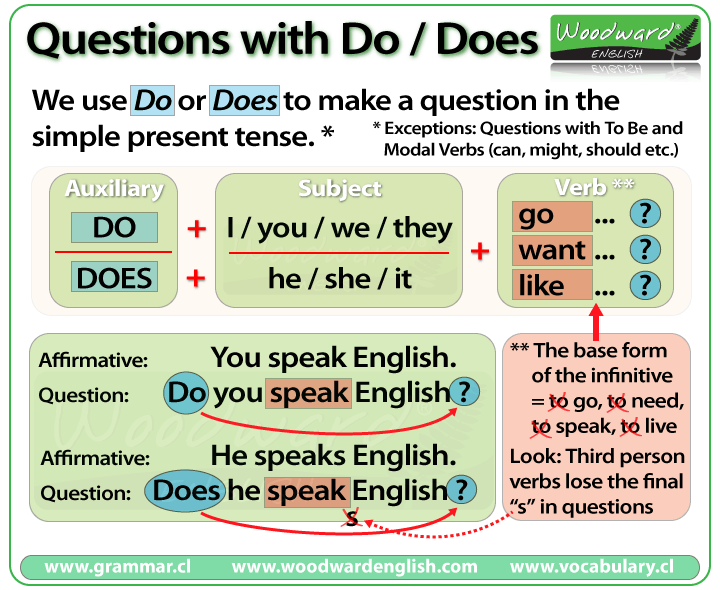
He/she/it form of do 2 For example, “i do like pizza” or “they do not want to go.” on the other hand, use “does” with the third person singular pronouns He/she/it form of do 3
Do and Does in English | Simple Present Tense Questions | Learn English
Present simple of do, used with he/she/it Use “do” with the pronouns i, you, we, and they See examples of does used in a sentence.
Both do and does are present tense forms of the verb do
Which is the correct form to use depends on the subject of your sentence In this article, we’ll explain the difference between do and does, cover when and how to use each form, and provide examples of how they’re used in sentences. Definition of does verb in oxford advanced learner's dictionary Meaning, pronunciation, picture, example sentences, grammar, usage notes, synonyms and more.
Does in british english (dʌz ) verb (used with a singular noun or the pronouns he, she, or it) a form of the present tense (indicative mood) of do 1 What’s the difference between do vs Do and does are two words that are often used interchangeably, but they have different meanings and uses Understanding the difference between these two words is important in order to use them correctly in sentences.
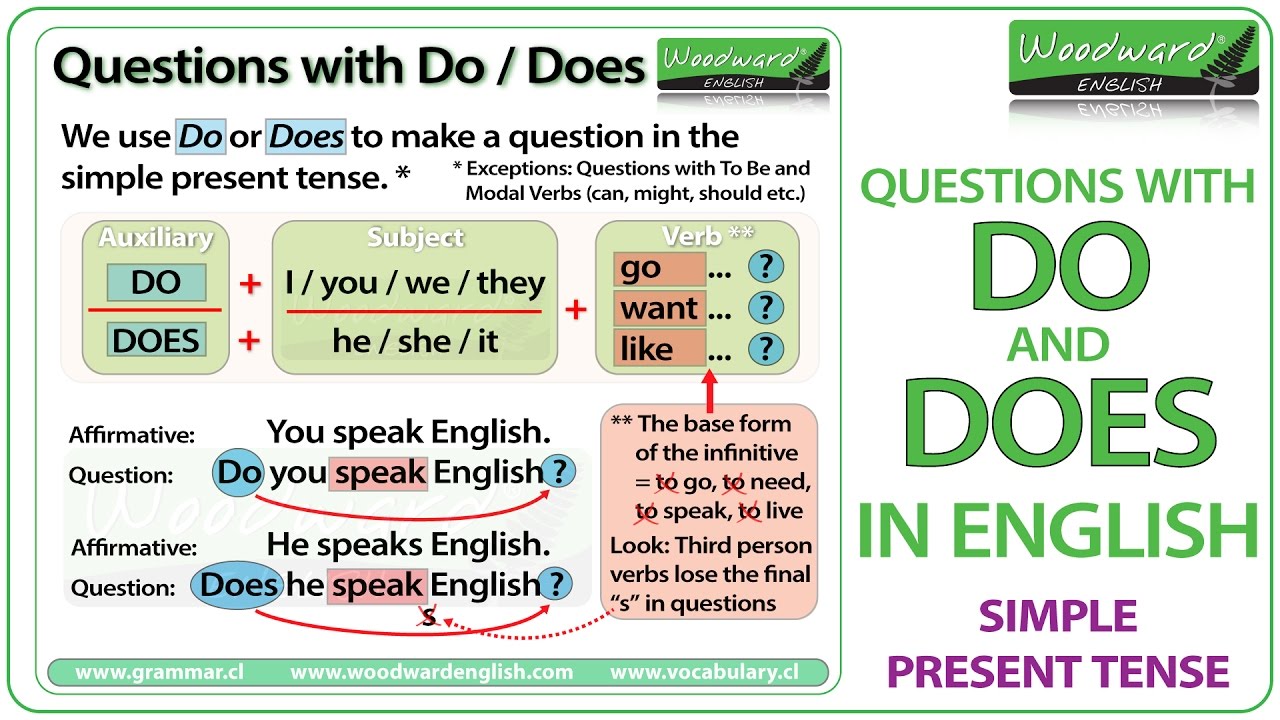
Master 'do vs does' with this easy guide
Learn the rules, see real examples, and practice with our comparison chart ‘do,’ ‘does,’ and ‘did’ are versatile auxiliary verbs with several key functions in english grammar They are primarily used in questions, negations, emphatic statements, and short answers. Understanding when to use “do” and “does” is key for speaking and writing english correctly