Jump In having sex with water choice internet streaming. No wallet needed on our entertainment portal. Explore deep in a ocean of videos of videos available in Ultra-HD, tailor-made for exclusive viewing aficionados. With contemporary content, you’ll always be in the know. Check out having sex with water expertly chosen streaming in stunning resolution for a completely immersive journey. Become a patron of our community today to take in exclusive premium content with 100% free, no subscription required. Stay tuned for new releases and navigate a world of special maker videos crafted for high-quality media fans. Be sure not to miss unseen videos—swiftly save now! Treat yourself to the best of having sex with water original artist media with breathtaking visuals and staff picks.
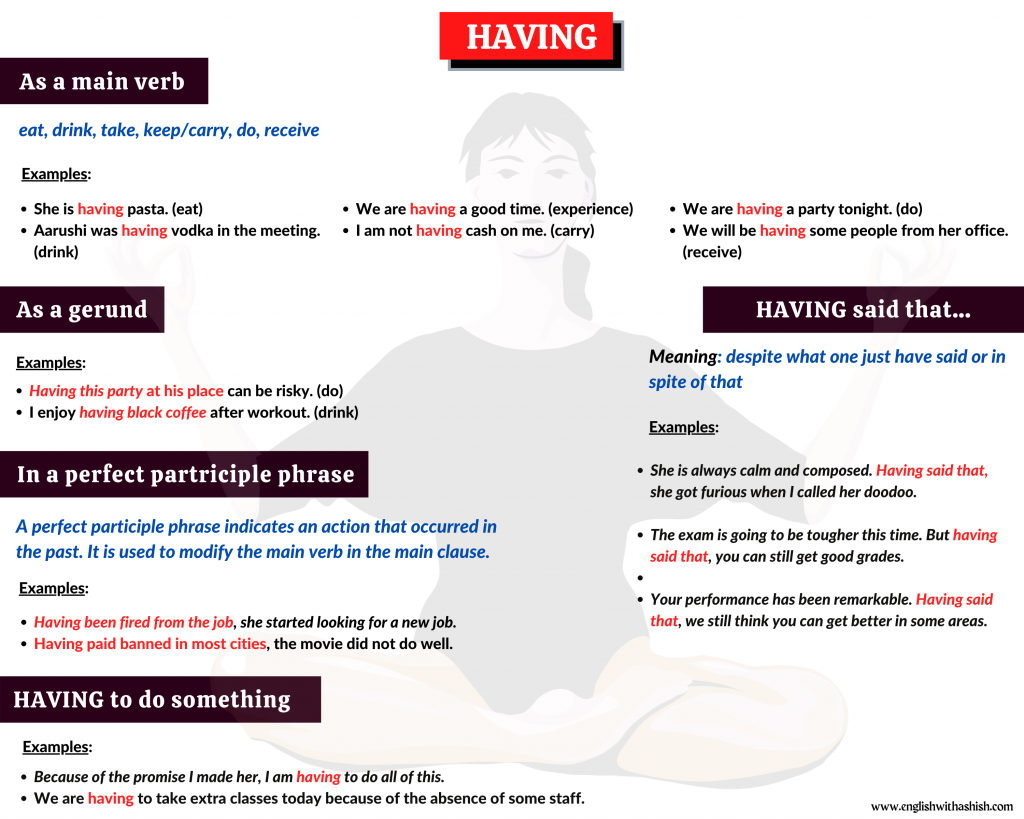
How to use having in english I don't choose what is the correct answer to it I have come across below statement
Use of Having - Basic English Grammar for Beginners || How to use
The customer having left, the criminal takes out a pin from his purse and scrapes off hardened glue from the edges of the keys. (to have/having) exceeded the company’s annual goals for productivity, all employees in a corporation’s manufacturing division received a bonus Having completed the task, i was free to go
Having completed the task, he was free to go
Having completed the task, they were free to go Colonel mustard, having completed the task, did you leave the premises immediately Or did you stick around and murder professor plum in the living room with the candelabra Having seen my mother work tirelessly, i was inspired to work hard
In this case you can see that the subject of the sentence is i Or the participle phrase can be the subject of a sentence In this use it is sometimes called a gerund Here having to replaces you have to am i correct in my opinion
Please correct me if i'm wrong about the meanings of those sentences
I think one more example could be Employment means you have to work employment means having to work Again, here having to replaces you have to Do both of these sentences convey the same meaning?
What is the difference between these two sentences, and when should i use them while talking He had same problem like my father And he was having same problem like my father Having is the present participle of the verb have, so having different opinions is a participle clause

With is a preposition, so with different opinions is a prepositional phrase
Both participle clauses and prepositional phrases can function as adverbials, and in your examples the meaning is similar. What differences are there between using the present tense 'have', future tense 'will have', and the future progressive tense 'will be having' in the following two sentences (one statement and one As fas as i know, have to is the commoner version of the two, but i'm finding more and more that having to is also used instead of have to She has to / is having to look after herself now.
As you probably already noticed these two sentences have different meanings I am having spaghetti means 'i am eating spaghetti' whereas i have spaghetti shows possession When verbs are used as both stative and dynamic, many times they have different meanings 'have' is a little more idiomatic in the way it is used in the continuous tense.