Jump In cin.ortega nudes pro-level media consumption. Without any fees on our entertainment portal. Plunge into in a extensive selection of clips made available in superb video, suited for discerning viewing fanatics. With the newest additions, you’ll always be informed. Locate cin.ortega nudes curated streaming in amazing clarity for a absolutely mesmerizing adventure. Get into our creator circle today to browse solely available premium media with zero payment required, without a subscription. Be happy with constant refreshments and investigate a universe of original artist media tailored for prime media junkies. You have to watch never-before-seen footage—begin instant download! Access the best of cin.ortega nudes unique creator videos with rich colors and select recommendations.
How do i use cin for an array asked 7 years, 1 month ago modified 1 year, 7 months ago viewed 78k times To grab an entire line of input, including spaces, try cin.getline(). 3 there is no close equivalent to cin in c
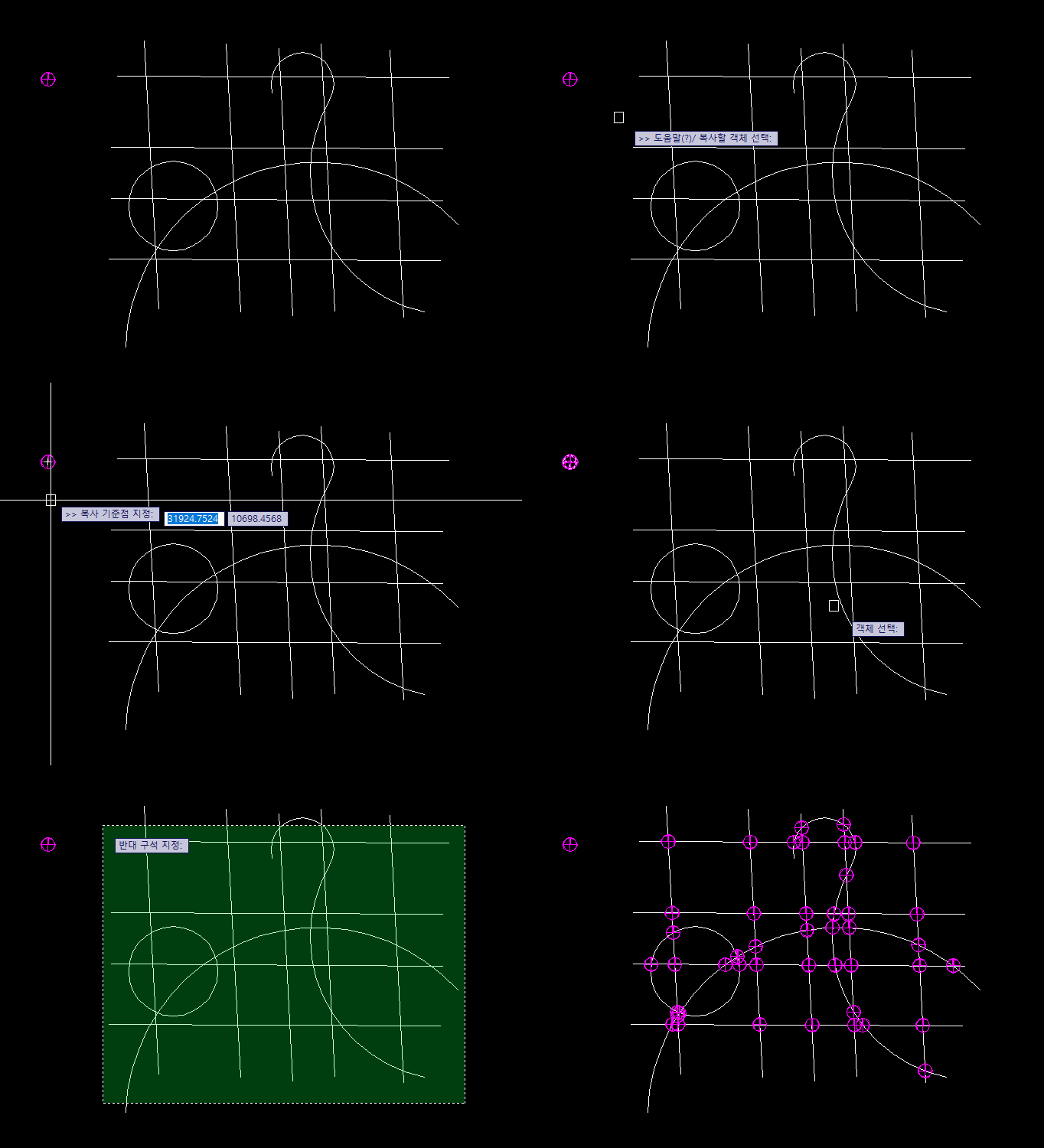
교차점에 객체복사, CIN :: XiCAD & etc...
However, you can read things in c using the c standard library, you can look at the relevant part here (cstdio reference). Using cin's >> operator will drop leading whitespace and stop input at the first trailing whitespace When using std::getline(std::cin, s) i would get a very messy and i would say, interrupted input when waiting for inputs in a while / for loop
This option resolved my issue!
I understand that cin.eof() tests the stream format And while giving input, end of character is not reached when there is wrong in the input I tested this on my msv c++ 2010 and am not understand. Yes, you can input multiple items from cin, using exactly the syntax you describe
The result is essentially identical to This is due to a technique called operator chaining Each call to operator>>(istream&, t) (where t is some arbitrary type) returns a reference to its first argument So cin >> a returns cin, which can be used as (cin>>a)>>b and so forth.
I am currently reading in with std::cin >> for the strings i expect to be single words and getline(std::cin, string) for the strings with spaces
I am not getting the right output, though. Both windows and linux define the behaviour of fflush () on an input stream, and even define it the same way (miracle of miracles) The posix, c and c++ standards for fflush () do not define the behaviour, but none of them prevent a system from defining it. Even if @david g has answered the question on how it works, i wanted to add a way on how to read a boolean using std::cin which might be useful for others to understand and use.
79 cin is an object of class istream that represents the standard input stream It corresponds to the cstdio stream stdin The operator >> overload for streams return a reference to the same stream The stream itself can be evaluated in a boolean condition to true or false through a conversion operator
